Trials in a new light

Leave a comment

Emerg Procedures

School is back in session and we’ve been briefed on emergency procedures.   I got to thinking about how trials are like fire drills for the Christian.  How so?  Their purpose is to put instructed procedures to the test, to see if they are sufficient.
So it is with hardships, problems and sufferings that try my faith. Instead of recoiling from difficulties, I should be glad to see whether there are any gaps or weak spots in my spiritual armor. For then I can take steps to strengthen and shore up my faith in God’s Word to me.
Why is testing and building up armor a good thing and how can that make me glad?
Joy comes from relying on God.  And an adequate spiritual defense is needed to live in this fallen world. Life is filled with devils and skirmishes are around every corner. The war is real. But with perfected, tested armor I can be assured that God’s provision is sufficient.
And sufficiency is connected with contentment.
Who doesn’t want to be content?  Ponder the originality of our Verbal Creator!  The Greek word – 714 arkeo, refers to these three aspect of the same state of being:
  • It is sufficient
  • I am satisfied
  • I am content

How cool is that!

Father, supernaturally grow in me the same state of mind that Paul learned – to be ‘arkeo’ or content because with You continually present, he carried his sufficiency within him.

Phil 4:12  I know what it is to be in need, and I know what it is to have plenty. I have learned the secret of being content in any and every situation, whether well fed or hungry, whether living in plenty or in want.

Christian Life Internship – Stage #25

5 Comments

Interns The summer’s sabbatical has refreshed and delighted me. The school year is underway.  My quiet time is shorter now.

Typically I struggle with resenting the reduced margin in my days as I step back into commuting and teaching Monday through Friday after the summer.  I cherish that restful season.  I take advantage of the each morning’s leisure to ‘noodle’ around in my Bible, to linger in prayer, to investigate Hebrew and Greek word meanings via the Blue Letter Bible app on my phone or laptop.

And already toward the end of July as I anticipated the reality of HAVING to budget my time again, it occurred to me that I was looking at my upcoming transition all wrong.

God gives me the 9+ weeks of summer time out of school for intense study.  Then he sends me from my home-based classroom back to my workplace for another residency in servanthood.  The internship goes from mid-August through the first week of June.  But there are classroom periods scheduled each Saturday morning and for an occasional week or so throughout my annual residency. These are called ‘national holidays’ and ‘spring break’.

Through Holy Spirit empowered faith, I am trying to approach each residency day with this greeting to my heavenly schoolmaster:

  • Okay, dear teacher, what do you have planned for me this day?  What practical exercises have you, in your wisdom chosen and laid out? What summer study lessons do you intend for me actually to apply this fall among my students, colleagues and family?

I think I can trust him to be a perfect tutor.  After all, the Greek word that sometimes gets translated as ‘discipline’ -paideuó, means to educate or train. Discipline is just part of the formation process.

Acts 7:22  Moses was educated/trained/instructed in all the learning of the Egyptians

Acts 22:3  (Paul says of himself that he was)….educated under Gamaliel

PS:  If you’re curious to know why I wrote “Stage # 25” in my blog post title….It’s because this is my 25th year teaching French!


What are you attached to?

Leave a comment

Did your attachment tendancies start with a pacifier or your favorite ‘blankey’?

linus Or were routines, like story-time right before bed your go-to comfort? Whatever it was for you as a child, you probably have some items or practices or even a person in your life that make you feel more secure.

Reading 2 Chronicles 26 about King Uzziah of Juda this morning raised the matter of attachment. Here’s how verse 5 reads:

He set himself to seek God in the days of Zechariah, who instructed him in the fear of God, and as long as he sought the Lord, God made him prosper.

The French translation of this verse adds a richer understanding.  The verbal phrase reads:  “Il s’attacha à Dieu…” (He attached himself to God…)

This amplification feels like a quartz vein shot through with gold, worth the effort to mine it.  Here are 2 questions to kick off our digging:

  • Why do we attach?
  • and, how do we attach?

First, why do we attach?

I think humans and animals are wired by God to crave certainty and security.  But He has designed us to look to Him to meet that need, not to anything He has created.  Given that the Fall fractured both us and all of creation, we are misguided. We look for substitutions for God that FEEL real.  For even though God is as real as anything we can see or touch, He is spirit, thereby immaterial and invisible to us at present.

On to the second question –  how is it that we attach?

Primarily by thinking about, talking about, keeping near, and treasuring.  A small child keeps his blanket close by.  A crying baby calms down with his trusted pacifier. When I was bulimic, I grabbed cookies or M&Ms to tame the stress.

For some, a variation of attachment might be an acted-out routine that has brought peace. I know friends who routinely undertake remodeling projects as a diversion from anxiety or for stop-gap immediate relief some go shopping or clean out a closet (me!)  More dangerous measures include gambling, porn indulgence, use of drugs or even some extreme sports.

(If you are curious to learn about some non-biblical, psychological reasons for attachment, here is a link to various views.)

Beyond inherent and obvious dangers, what’s wrong with the above attachment items or practices?

The only reason that counts is simply this: these stress-relievers are just as uncertain as the uncontrollable circumstances that bring suffering.  When LIFE happens, pressuring us, what if we are circumstantially kept from our go-to stress reliever?  Maybe that’s the origin of the expression ‘going postal’! Our God knows there are times we humans explode in anger or act otherwise irrationally.

God offers a different way of handling life’s uncertainties and stress, one that the apostle Paul learned.  This morning, while reading a bit of Puritan pastor William Gurnall’s teaching on holding on to faith in the Triune God, I glimpsed a connection to Paul’s teaching on contentment.

You are familiar with this early Christian boasting in having acquired the ability to be content in all circumstances.  ‘All’ included the gamut of experiences ranging from physical comfort and ease all the way to the many times he suffered beatings, imprisonment or calumny from his fellow Jews. (Phil 4:12)

I think Gurnall provides the method for Paul’s method of ‘learning’. Gurnall writes that in times of blessings, plenty and the absence of suffering, we should practice  “Keep(ing)…(our)..minds on things that are above, not on things that are on the earth.” Col 3:2

Then when the times of suffering and deprivation come, we should be more equipped to continue to feed ourselves on the rich truths of heaven, the expectations of one day enjoying our inheritance presently kept for us by Jesus.  Directing our imaginings Godward takes practice. You’re probably like me.  My thoughts DO NOT automatically tend toward meditating on the ‘diverse excellencies in Jesus Christ’ (Jonathan Edwards). It takes effort to dig and work a groove in my mind, through much exercise.

I mention Edwards’ line above about what to think about when meditating on Jesus. Because when I first considered devoting time to building a habit of thinking about ‘things above’, my first reaction was:

  • just what should my mind focus on?

John Piper gave me a clue when he quoted Jonathan Edwards in a sermon I recently heard. An example of these very different but astonishing qualities of Jesus would be how He is both the Lion and the Lamb.  Powerfully fierce and humbly submissive, all at the same time.

There ARE multitudes of rich treasures to be mined in the Bible.  And I think this is what is meant by God’s teaching us to ‘attach ourselves’ to Him.  We attach primarily by what we think about and talk about.  If I’m attached to my children, then I will pull out pictures and extol all the cute things they do.  Likewise, if I’m attached to God, I will boast in how great He is.

Contrary to what a material naturalist might argue, we are NOT deterministic beings.  We have been given the gift of imagination, of choosing what to think about.  Paul knew that. Therefore, I think his secret of learned contentment was harnessing and directing his thoughts God-ward.

That encourages me.  I know that I have plenty of time when my mind can float.  I do have the power to direct and focus those thoughts.  I CAN practice a new and different way of thinking.   I want to build up these mental and spiritual muscles of my mind during those periods when I’m not struck down by suffering.  Then when pain does come, I will know how to flee to my true refuge.

I’ll leave you with the French exhortation:

Attache-toi à Dieu!

Perfection and futility

Leave a comment

clay pot  “There I go again!”  as hammering self-condemnation reprised.  I had just done what I didn’t want to do, overeat.  Nothing really sinful in that per se, except that overeating is a gateway to my sin of self-centered, interior moping. More familiar than any other melody is my original adaptation of the human ‘Ode to my Pitiful Self’.

But thanks be to God and Bible-centered preaching and writing! Pastor and teacher John Piper rescues imperfect sheep prone to turn inward by proclaiming a recurring life-giving message of: “Don’t waste your disappointments, trials, suffering, failures,……”

God must have thought it was time to break my bent towards control and perfection with this sovereignly ordained ‘trip-up’.  So what galls me the most?  What sends me into despair each time I let myself down and overeat? Certainly not His condemnation, but MY disappointment with myself.

Here’s the rub:  Why am I even surprised that I can’t do what I want to do?

Like Paul, I wail: I don’t really understand myself, for I want to do what is right, but I don’t do it. Instead, I do what I hate. Romans 7:15

“Stupid!,” this home-grown expectation or gateway toward self-chastisement. A recent podcast drove that home.  The speaker had been in therapy for a broken marriage and started to heal when she made the connection between her:

  1. Assumption that I CAN be perfect (do what I want to do)
  2. Anxiety over the burden of trying to be perfect
  3. Bondage to control in order to gain perfection

I suddenly saw the futility when I realized that we were never meant to strive for perfection.  In fact, God has intentionally designed us the opposite!  The human model comes with abundant limitations.  We see them as flaws; He ordains them as gateways for God’s glory and grace to show.

...we ourselves are like fragile clay jars containing this great treasure. This makes it clear that our great power is from God, not from ourselves. 2 Cor 4:7b

Breakable clay is the term for earthenware. In Paul’s time, vessels, plates, jars, cups were made of a clay mixture containing oyster shell pieces. God has purposefully made us out of crumbly stuff.  The Almighty Father and Creator made us delicate and fragile so that we would depend and rest on Him to do all that He calls us to do.  He didn’t aim to populate His kingdom with self-sufficient, sturdily consistent perfect little beings.

That is good news, brothers and sisters.  Let it go, all those expectations of how you want to act.  Yes, we are called to be imitators of Jesus, to be holy because God is holy.  But He knows we are going to blow it, multiple times a day.  Why are we the last to accept that?

Holy Spirit, remind me straight away when I miss the self-assigned mark I naïvely think will make me feel good about myself.  Grow me a new song,

a melody of music“Here I go again, a perfectly designed child of my Father who just sent me a love note that says, ‘Maria, come to me with your mess; don’t be surprised, you just need to give it a rest and flop down and swim in my grace and love!‘”



Agreeing with Satan = my self-condemnation

2 Comments

There is therefore now no condemnation for those who are in Christ Jesus. – Romans 8:1

There it was, PROOF!  – a ‘poochy’ in a photo we asked someone to snap of us at the peak.   I was horrified to SEE it.  Two days earlier I had realized the evidence of what I had been reluctant to admit, I had gained a few pounds over the past few months. I could feel it and see it in the mirror, but now here it was in living color, digitally for the world to see!

The self-recriminations had set in 60 hours earlier and I had been battling them armed with God’s truth SOME of the time.  At other points, my brain buzzed in the high RPM range, figuring out what I was going to do to lose the 5 pounds.

What also bothered me was I thought I had put the Weight and Body Image Battle behind me, having even declared VS Day – Victory over the Scales Day on 5 Dec 2015.  That day marked a turning point when I symbolically moved the scales off the throne of my heart to make room for Jesus as supreme treasure and pleasure.

But by the full force of this self-recriminating skirmish, all I had done was substitute a different but equally deadly joy-sucking idol for that morning metric measurer, the bathroom scales.   What was this new enemy? –  the concept of leanness as my supreme good.

After the hike, I took my journal outside on the deck to see if I could get to the bottom of this seeming forever struggle.  And God was faithful to spark some gut-wrenching insights into the sin underneath this internal drama.

Here are the questions I wrote down:

  • Why does having a ‘poochy’ bother me more than my sin of idolatry and scorn against a Holy God?
  • Why is ‘leanness’ my ultimate and mostly elusive good?

The first question brought immediate remorse over my topsy-turvy value system.  The scales were just the outward and visible manifestation of my inward and wicked heart as represented by ‘the leanness idol’.  Abandoning my quest to maintain a certain weight didn’t take away what I still valued most in life.

The second question led to digging beneath the visible layers in my heart. By continuing to ask WHY, I tried to reach the bedrock of what drives me.

  • Why do I value leanness?  Because I most admire those women who are lean and fit
  • Why do I admire those kinds of women? Because they are free of self-loathing.
  • Why would NOT being ‘perfectly’ lean bring self-loathing? Because in myself, I can’t stand the feeling of a roll of fat or pudginess or tight rings or clothes.  They make me mad and I feel stuck and depressed.  And all that negative emotion pushes me inward into a seemingly self-perpetuating prison. I do all this to myself!

And then a question that directed healing light to that dark place in my heart.

  • What is the opposite of all that yuck I just described? Contentment with myself.  When content, I find it natural to forget about myself and focus on God and others.  Balled up in myself distracts and distorts the destination of my energy.
  • So if I seek a more lasting and better contentment and inner peace, what would God rather me choose as a source?  Why pleasing Him by being satisfied in Him, of course! The answer was clear as day.

Just at the moment that the Holy Spirit enabled me to ponder this pleasant place of happy and restful contentment, He called to mind Paul’s words about having LEARNED to be content in all seasons.  Hmmm.  If Paul could learn, through practice, then so could I!

A bit energized I started to reason biblically:

  • If God is FOR me, who can be against me?  (not even Maria’s self-criticisms count or SHOULD be able to pierce my peace)
  • If I have been declared ‘just’ by God (as a gift, through the mechanism of grace, and secured by Jesus’ redeeming payment with His life – Romans 3:24), then I already possess a permanent unshakeable peace with God.
  • When I beat myself up for having gained 5 pounds, I am participating in condemnation – Satan’s hideous and soul-eating handiwork.  He is the Accuser par excellence.  Agreeing with Satan mocks Jesus’ extravagant gift to me.

I was almost at the point of echoing my ‘Uncle Paul’s despair-filled cry, Oh, what a miserable person I am! Who will free me from this life that is dominated by sin and death?” – Romans 7:24.  At that very moment, I think a whimsical but life-giving picture came to me. I imagined Jesus looking at me with a twinkle in His eye and saying:

Maria has a poochy and I LOVE her poochy!

What a startling but gentling image. Is it really so far out of the realm of divine possibility?  After all, it was my husband who used to say with tender and happy love about our cat Calvin, Calvin has a poochy!  And Calvin was his favorite cat!

If it’s TRUE that there is nothing I can do to make Jesus love me more or less than He already does, then why not THIS scenario of Holy Joy in one for whom He died?

I think the healing took root at that point, Saturday afternoon, on our deck in the sun, journal and pen in my hands.

Almost with embarrassed hesitation I shared these new insights with my husband.  I felt that unless I articulated them out loud to another person, then I might slink back into the dark, dreary cave where I have beat myself up for far too long.  But there it was, in the light of day, publicly proclaimed for the person most dear to me and uttered out loud ALSO in case that the devil, himself, might be lurking.  And I, too, heard this new ‘fact’.  Maybe it was more important for ME to hear those words spoken out loud, witnessed by my husband and the Holy Spirit.

So I’ve been saying to myself several times a day, ‘I have a poochy and Jesus loves my poochy!’


Do we work for our salvation?

Leave a comment

“….Continue to work out your salvation with fear and trembling,  for or it is God who works in you to will and to act on behalf of His good pleasure.…” Phil 2:12b-13a

Work out your salvation

Do you ever feel like you’re on the outside of a certain Bible passage, looking in? Like you can’t unlock what the verses mean, no matter how much you chip away at the word meaning or greater context?  I’ve felt that way for a LONG time, about MANY verses that seem too short and too cryptic.  Recently John Piper explained what is beginning to happen to me.  And it’s a welcome change.  Let me share a recent example and maybe you’ll find some hope for how you, too, can be rewarded with nuggets of gold after some hard-core mining.

A piece of that reward arrived this past Sunday as I was poking around Blue Letter Bible to research the Greek meaning of ‘work out’ in the cited verse.  In that rich soil, God brought forth a new ‘aha!’ moment as He opened up my understanding of Paul’s exhortation to the Philippians.  I’ve always struggled to understand two aspects of his ‘strong suggestion’.

  • what are we working out?  are we actually working toward our salvation?
  • what does working out one’s salvation have to do with what God is doing IN me?

What I have found is that some of the Bible seems to be written in a shorthand form.  A lot of explicit explanation just isn’t there.  Reminds me of poetry, which often stumps me. Or maybe some of these puzzling lines are like the parables Jesus told, meant to keep out those whose only interest in Truth is passing.

But I WANT to know, to understand, to OWN more and more of God’s Word.  So I dig around and soak in the Bible A LOT.  And after 18 1/2 years, things are beginning to ‘pop’.

What got me soaking all those years ago?  I started actually STUDYING the Bible systematically through an in-depth Bible study called Bible Study Fellowship (BSF link here).

I had become a Christian 16 years earlier, but my scripture reading was hit or miss and except for about a year in a British Anglican church, we weren’t around ‘Christians’ who actually believed that the Bible was God’s authoritative Word, alive and full of power.

BSF changed all that.

So now, although we have moved and don’t find ourselves near a BSF class, we continue to read and study our Bible and belong to a church that submits to the authority of the Word.

And I’m beginning to reap my investment of time and energy.  Verses and passages which previously remained closed to me are now opening up.  And it’s exciting!

So what about the WORKING OUT conundrum?  Here’s what I figured out or WORKED OUT from reading the Greek meanings of katergázomai/work out.  When we take something and think it through and see how it applies, then it becomes OURS.  We’re fashioning it to fit into what we already know.  It’s like making room in your house for a new painting.

I was relieved to conclude that NO, we don’t do works to earn our salvation, but we have to renovate our entire understanding of who we are and why we exist in the first place by yielding to God as our Creator, Redeemer and Happy Master.  And the comforting good news is that God does not leave us to do this home renovation on our own!  Look at Philippians 13:a.  It’s God Himself who is at work in us both to DESIRE (will) and WORK to please Him.  What a sweet deal for us.

Knowing God so far, it’s safe to assume that He has many more treasures for me.  If I stay rooted like a tree, near His living and life giving water, then as I draw up cool refreshing nourishment, I will continue to grow.

Tree by a stream

Am I harder on myself than God is?

1 Comment

1 Peter 4:8 – Above all, love each other deeply, because love covers over a multitude of sins.

James 5:20 – Remember this: Whoever turns a sinner from the error of their way will save them from death and cover over a multitude of sins.

Psalm 103:12 – As far as the east is from the west, so far has he removed our transgressions from us.

Faith's Hall of Fame

Have you ever wondered at the accuracy of God in his assessment of major Biblical personalities such as David, Lot, Noah, Moses and Abraham?  A few of the sins in their lives include:

  • murder
  • adultery
  • parenting of daughters that is abusive by its shameful neglect
  • drunkenness
  • pride
  • self-protective lies that potentially jeopardized the line of God’s chosen people?

Come on, God! You know everything.  Don’t these ‘biggie’ sins disqualify all but maybe Enoch, about whom you report only positive behavior and character in Scripture? How can you even love, let alone acclaim these men You created, called and commissioned?

I thought about this incongruity when struggling a few days back with heavy thoughts of what a poor mom, mother-in-law, friend and grandmother I am.  Maintaining relationships in the way I think they should be cultivated is difficult for me.  Oblivious in my earlier years, but increasingly aware since I turned 35, I have grown in both my appreciation of and commitment to investing time in the dearest of people.  Yet….I often beat myself up for not “X-ing” enough (substitute multiple action verbs for the X).

In the middle of the current ‘I’m not enough’ doldrums, I passed on to one of my daughters-in-law as worth reading a blog post that resonated with my current bleak self regard. She immediately shot back some probing questions that forced me to look even closer at my pity party.  One of her arresting thoughts was this:

  • The more I love my ‘I don’t do this well’ self-assessments, the freer I am to see God work IN those weaknesses.

Hm….

That was last Sunday morning, right before church.  So I worshipped God while all the while thinking through what might be God’s perspective about my ‘muck’.  It occurred to me that nary a ‘Bible Giant’ such as the five I mentioned did everything well.  In fact, when they worked on their own, they fell into big sin.  Only when they served in humble and thankful dependence on God did they experience supernatural results that pointed to God’s intervention.

And isn’t that what God wants?  If we humans, we Christians succeeded in our own wisdom and strength, how would God look good and desirable?

If my weakness is NOT something God despises, then, why do I grant myself freedom to indulge in such negative introspection?  After all, God provides a quick and effective way out of sin, out of my moral debilities long marinated in self-condemnation.

  • If we confess our sins, God is faithful to forgive us our sins and cleanse us from ALL wickedness and unrighteousness. 1 John 1:9  And what is unrighteousness, but doing something in our own strength and wisdom.  God calls that sin, because…. 
  • Whatever does not proceed from faith is sin. Romans 14:23

There’s actually another sin going on in my stewing in my ‘I don’t do this well’ muck.  It’s plain ‘ole’ fear, mixed with shame.

What do I fear?

  • I’m ashamed that relationships with others, including family, friends and grandkids do not come easily due to my selfish nature
  • Just as I felt insecure as a young mom…that sense from long ago has carried over into feeling unsure as a grandmother
  • If any of my friends or family knows that I have to ‘work at’ a relationship they will feel less loved or think I’m being artificial.
  • My pre-supposition (and fear) must therefore be, “anything that doesn’t come naturally, spontaneously from the heart, is 2nd rate and not authentic. If you have to work at loving someone, you must not really love them. And if you KNOW that about me, you will think less of me.”

Self-criticism  In those ‘I don’t this well’ areas, I obviously have been listening only to these fear voices.

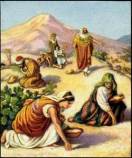
But if I think back to Old Testament ‘giants’, I also see how God assesses them throughout other passages.  For instance, the so-called Hebrews Hall of Fame spotlights the noble actions of some well-known personages.   It doesn’t take much study to notice that those God acclaims as praiseworthy are also ones about whom we have read many unsavory accounts.

What does that say about how God views His children and perhaps how we should view ourselves?

Could it be that as forgiven, adopted and beloved sons and daughters what count are the actions done IN faith, IN dependence on Christ, with no subtraction due to our gross sins? (or ‘little’ sins for that matter – since all sin is forgivable by God when we confess)

And if that is how God evaluates us, sinful as we are, should we spend more time than say, Paul, who acknowledging himself as the ‘worst of sinners’, yet does not allow that fact to deter him from moving ahead.  (1 Tim 1:15 – This is a trustworthy saying, and everyone should accept it: “Christ Jesus came into the world to save sinners”–and I am the worst of them all.)

So, bottom line for Maria, and maybe for you:

  • Yes, there are areas of my life where I am wobbly (my Mom’s term), but they should point me all the more gratefully to God’s promise to be sufficient for me.
  • It is WRONG and SINFUL to fear and beat myself up (a form judgment and of self-atonement – 2 jobs God has explicitly told me to leave alone.  See Ex 20:3 – Thou shall have no other Gods before Me!)
  • With plenty of areas of weakness, why not look at these situations as prompts to practice turning straight away to God for my supply?

Final thought to marvel over and give thanks: 

Because God the Father has already forgiven my past, present and future sins thanks to Jesus’ substitution for me in death and life, God can justly keep track of those deeds done in faith and happy dependence on Him.

Dear Father, send your Holy Spirit to remind me to STOP beating myself up, even though that is a familiar habit.  Remind me, supernaturally, to look to Jesus for both forgiveness and provision to believe and to do what and where and how You are calling me as your child.  Resting in the sure promises of Jesus, I ask this.  Amen


Sleepless nights – when are they a good thing?

2 Comments

Restless and troubled by this persistent dream, she could not sleep.  Foreboding thoughts and feelings flitted along the edges of her semi-conscious mind. What did her dream mean? Why was THAT man even in her husband’s presence? Pontius had not mentioned last night at dinner that he was holding in the dungeons this Rabbi and Healer, the talk of all Jerusalem.

Pontius Pilate's wife

She fell back to sleep and the dark drama continued. She watched with horror as the man called ‘The Christ’ silently endured beatings and taunting.  The soldiers who jeered, smirked and spat on the suffering, compliant victim were HER husband’s men. Her heart felt like it was about to leap out of her chest, her mouth ready to shriek in protest.

In her dream, compelled forward to watch the horror of merciless mocking and abuse, she had pressed around her imposing husband’s back. But this stocky man, transfixed and silent, would not let her edge around him to see.  Blocked then, she nonetheless heard the snapping whips, thudding and biting torn flesh. She recoiled as each whistling lash found its mark.

She had woken with a start, shivering in a cold sweat. What was she to make of this dream?  Resolve forming, she called her maidservants to fetch water to wash and dress for the day.  Maybe she could stop from happening that which no earthly person in the palace had told her about.

*

It is vain for you to rise early,
To retire late,
To eat the bread of anxious labors—
For He gives [blessings] to His beloved, even in his, sleep.  Psalm 127:2

What keeps you awake at night?  I remember reading about Andrée Seu Peterson years ago and how for about 18 months, God kept her from sleep-filled nights.  What I recall is that she eventually accepted this suffering as a gift from God and used it to pray and read her Bible. Then, all of a sudden, God restored her sleep.

Then there are those Bible characters whose sleep is interrupted by Divine dreams. Heroes of faith like the two Josephs: Jacob’s son from Genesis and the much later legal dad of Jesus – THAT Joseph.  There were also those traveling sages from the East who were warned in a dream NOT to report back to Herod.  And you remember Paul who recounted in Acts 16:9 about when he received specific guidance – “During the night Paul had a vision of a man of Macedonia standing and begging him, “Come over to Macedonia and help us.”

Not only God’s people, but major players in history have puzzled over dreams like Egypt’s Pharaoh with the fat cows and lean cows (as well as the baker and the wine steward sharing a prison cell with Joseph, Bar Jacob). King Nebuchadnezzar also suffered nightmares that no one but Daniel could interpret, thanks to God’s wisdom.

Divine dreams that communicate a message are positive, GOOD reasons for sleeplessness. But I know you are probably as familiar as I am with the negative and sinful impediments to a rest-filled night.  Yes, I’m talking about not being able to sleep due to the anxieties of the previous 24 hours or of the morning soon to break.

Sometimes, my mind races with too many thoughts and I can’t settle it.  Not that I am worried……but I can’t shut it off.  Is that sinful?

The other night I didn’t get home until 13 +hours after I had descended our Smoky Mountain cove en route to Asheville.  Then, after school, I had headed to an evening meeting, eventually walking into our home a little before 8 pm.  I go to bed fairly early on school nights, so there was little decompress time – especially since I shared with Mike about the day (I had been professionally reviewed by my principal) as well as the meeting later on.

My mind was running at an RPM speed normal for my active day.  The thoughts continued as I settled into bed a little after 9 pm. I know we are commanded to count on (trust) Jesus and hand over ALL of our cares, for He promises to take them on.  I wasn’t ‘worried’, nonetheless the grey cells labored on.

Eventually I fell into a deep sleep, but awoke exhausted the next day.  Was it my fault? Could I have handled the night differently?   My first defense was: “I couldn’t help it!” Normally I DO slow down after dinner; the conversation is less intellectually engaging, I read the paper and then a book to prevent electronic stimulation.

But saying ‘it’s not my fault’ is irrelevant and doesn’t help.  Our good Father actually gives us tools to use.  Thinking about this kind of night since then I’ve come up with a plan.  I’m going to do what Christ exhorts us through Paul in his letter to the Philippians:

Finally, brothers and sisters, whatever is true, whatever is noble, whatever is right, whatever is pure, whatever is lovely, whatever is admirable—if anything is excellent or praiseworthy—think about such things. ………And the God of peace will be with you. Phil 4:8, 9b

I want that kind of peace at night, don’t you?  But what assurance do you and I have that we’ll be able to KEEP our thoughts fixed on the above worthy topics? Just the fact that what God commands us to do, He gives us His strength to do. (I’m encouraged by Paul’s teaching in the same letter: “…for it is God who works in you, both to will and to work for his good pleasure.”  Phil 2:13)

And just which topics are true, noble, right,…..?  We can start with recalling truths about God – who He is, what He has done and what He promises those who call Him Father.

PS:  Back to the story at the beginning of this post – what do you think?  Will we encounter Mrs. Pontius in heaven?  What about her husband?

Rotting manna

Leave a comment

“Mother, you’ve gathered too much!  You know what Father instructed us to do, ” seven-year old Adina exclaimed with astonishment.

The determined woman was quickly stashing extra manna in her robe’s folds.  “Hush, Daughter.  You don’t know what you’re talking about!” Carmela commanded, moving the sack already filled with the day’s flakey white substance.

The two had left the tent since daybreak and numbered among the many, quickly collecting what would be their only foodstuff until the evening quail God promised.  Moses had commanded the men, her husband Zibeon included, on how much and when to harvest the strange-looking and utterly unappealing white scraps.  They were then to mix and shape the flakes together with some water, baking it on a flat, iron pan-like board over the family’s fire.  Surprisingly, the result yesterday had been tasty and satisfying.

manna

More important than HOW to bake this new food, was the injunction JUST to take from the ground what would be sufficient for the number of people in each family.  Yesterday Zibeon had been with his wife and daughter and Carmela had been afraid to pick up more than necessary.

But today Zibeon, confident that his wife knew what to do, had sought out some of his tribe’s men with whom to confer about other matters.   Consequently only little Adina accompanied her mother.

The child did not pursue the topic of conversation.  Hebrew children knew better than to argue with their parents.  But she pondered what Father would say or do if he knew.  Her mother did not leave that possibility to chance. Upon entering the tent, she strictly warned Adina not to report anything to Zibeon.  “Your father has enough on his mind, Adina. Besides, Mother knows what she is doing.”

The day sped quickly as Adina helped her mother with household desert chores and played with her cousins.  Forgetting the morning’s incident, Adina with her tummy comfortably filled with this new wilderness food that God had provided, fell asleep shortly after sundown.

But the next morning, the conversation rushed back as she awoke to her father exasperatedly demanding, “Where did all these maggots come from?”  He and Carmela were examining a clay container where Mother had stashed the extra, forbidden manna.  Carmela sheepishly confessed her role in inviting creatures drawn to the rotting flakes. Having learned her lesson, she decided instead to trust the living God, Yahweh, who had promised the Hebrew people that He would provide food each day.

**

This fictionalized figment of my imagination is based on the account in Exodus, chapter 16, starting with verse 13b:

“….in the morning the desert all around the camp was wet with dew; 14 and when the dew disappeared later in the morning it left thin white flakes that covered the ground like frost. 15 When the people of Israel saw it they asked each other, “What is it?”

And Moses told them, “It is the food Jehovah has given you. 16 Jehovah has said for everyone to gather as much as is needed for his household—about two quarts[a] for each person.”

17 So the people of Israel went out and gathered it—some getting more and some less before it melted on the ground, 18 and there was just enough for everyone. Those who gathered more had nothing left over and those who gathered little had no lack! Each home had just enough.

19 And Moses told them, “Don’t leave it overnight.”

20 But of course some of them wouldn’t listen, and left it until morning; and when they looked, it was full of maggots and had a terrible odor; and Moses was very angry with them. 21 So they gathered the food morning by morning, each home according to its need; and when the sun became hot upon the ground, the food melted and disappeared. 22 On the sixth day there was twice as much as usual on the ground—four quarts instead of two; the leaders of the people came and asked Moses why this had happened.”

And the application to us, in the 21st century is two-fold.  First, no matter which economic stratum describes us today, what we need comes from God.  We are to depend on Him for all our needs during this present 24-hour period. The ‘Daily Bread’ Jesus teaches us to ask Him for is broad enough to include all our necessities.

But for those who are not dirt-poor, the rotting manna lesson is just as crucial and freeing.  When we gather and stash away more than we need for this day, the extra spoils and is good for no one.

God cares more about developing in us the UNNATURAL and learned reflex of trusting Him to provide for tomorrow.  If we allocate extra resources that we keep just for ourselves, why WOULD we or SHOULD we put ourselves in the uncomfortable position of dependence?  Oh, just for a mere reason or several:

  • God commands it. – “And he (John the Baptist) answered them, ‘Whoever has two tunics is to share with him who has none, and whoever has food is to do likewise.’ “ Luke 3:11
  • Giving away our surplus, ‘our bread for tomorrow’ brings joy“Now, friends, I want to report on the surprising and generous ways in which God is working in the churches in Macedonia province. Fierce troubles came down on the people of those churches, pushing them to the very limit. The trial exposed their true colors: They were incredibly happy, though desperately poor. The pressure triggered something totally unexpected: an outpouring of pure and generous gifts. I was there and saw it for myself. They gave offerings of whatever they could—far more than they could afford!—pleading for the privilege of helping out in the relief of poor Christians.” 2 Cor 8: 1-4
  • Relying on God humbles us and brings glory to God in the eyes of the world AS He meets our needs –“I give water in the wilderness, rivers in the desert to give drink to my chosen people, the people whom I formed for myself that they might declare my praise.” Isaiah 43:20-21 
  • Realizing that all we have belongs to God who is our provider frees us from being tied down to stuff.  John Wesley, reacting to news that his house had burned down, nonchalantly responded with something like, ‘It belonged to God anyway; one less responsibility for me!’ 
  • Finally, HAVING to depend on God is apparently what God, our good father thinks is best for us.  When Paul describes the trials that he and his fellow missionaries underwent he adds: For we were so utterly burdened beyond our strength that we despaired of life itself.  Indeed, we felt that we had received the sentence of death. But that was to make us rely not on ourselves but on God who raises the dead.” 2 Cor 1:8b-9

So what is going on in my life that has caused this reflection?  Just the trials from the past 2 months and my return to desperate praying of both the Lord’s prayer and Psalm 23.  I’ve sought renewed assurance that He will provide. And along with banking all on those rich promises and practices I’ve been confronted with my need not only to TRUST GOD and abandon anxiety and fear but actively to practice DEPENDING ON HIM through voluntary generosity of time, talent and money.   What helps is remembering that the EXCESS, what I hoard and hold back, will rot just like the manna. And then what good will it be?


Is worry normal or is it a sin?

1 Comment

Worry

Yes!

Yes, anxiety is normal and yes, practicing anxiety is a sin.

And there is good news.

I’m being trained to look behind a statement in scripture to reason about the condition of the author.  For example, yesterday morning I paused at verse 4 while reading Psalm 86:

  • Gladden the soul of your servant, for to you, O Lord, do I lift up my soul.

Since it was a rainy, gloomy Saturday morning I immediately asked God to gladden both my and my husband’s hearts.  But afterwards I realized that the only reason the Psalmist would have penned such a request was because he was struggling with the blahs or worse and knew he could count on God to help him!  Why ask for something of which you have no need????

Here’s another verse from Matthew 6:25

  • I tell you, do not worry about your life, what you will eat or drink; or about your body, what you will wear.

Why would Jesus dedicate these minutes to expound on worry if He didn’t SEE or KNOW that worry was present in the hearts and minds of those listening to Him?

How about the command NOT to fear?  I read in the on-line Christian Post (5 Nov 2014 blog post entitled Faith over Fear) that Jesus’ primary teaching was: to love others. (125 times taught in the Gospels) According to the writer of the post, Jesus presented and organized His teachings by theme.  And the primary theme (21 times) for His instruction was about FEAR.  Do not fear; don’t be afraid; be courageous; be firm in your faith.  This means that Jesus exhorts us to LOVE by NOT FEARING.  Hmmm, could it be that fear drives out love?  Is that the reason that the apostle John pens in 1 John 4:18?:

  • There is no fear in love. But perfect love drives out fear,

And why would Jesus repeat such a message if it weren’t a glaring problem?

So YES – worry and anxiety are normal, but they are neither GOOD, nor HEALTHY, nor appropriate for Christians.  In fact, worrying is a sin since God commands us NOT to worry.

So how does it help to know that worry is both a sin AND a normal reflex?

Because God doesn’t leave us to battle it on our own. There is supernatural power to fight sin.  And we are called to enter into warfare every day of the Christian life. Through daily practice similar to our workouts at the gym, we will strengthen our reflex to rely on His promises and character, growing more like Jesus.  But let’s be realistic; we will not eliminate anxiety 100 %. Therefore, we can expect to have to engage this enemy of the faith daily, WITH the resources God provides. Even my hero of the faith, George Müller, admitted that the decade of his 90s were the hardest.  I imagine his struggles had to do with declining health and increased physical limitations.  There are always new fears to confront.  But God promises fresh mercies each day (‘our daily spiritual bread’)

It’s not for rhetorical reasons that Paul exhorts young pastor Timothy in his first letter, chapter 6, verse 12:

  • Fight the good fight of faith 

This same Paul is the one who explains how to dress daily for the warfare.  Besides defensive armor, he reminds us that there is ONE offensive weapon – God’s word.

The only way to drive the worry dragons away is by saying or singing or shouting or meditating on God’s many promises to BE our strength, to BE our peace and then to bank our life on those promises given to us by a Loving Father whose character is trustworthy.

Here’s one more look at a desperate psalmist and how he deals with danger or suffering

  • If your law had not been my meditation I would have perished in my affliction. Psalm 119:92

The fact that he mentions his affliction is significant.  Like us, he had a choice of mediating on how bad his circumstances were and how he couldn’t see a way out OR he could chew on the truth of God and what He has said.  This Old Testament man of faith makes it clear had he chosen the former course of limiting his view to the present, he would have died.

Aren’t we blessed to have the Bible which does not sugar-coat life’s sufferings?  Instead, it tells us that pain is real and there is help that is equally real and available.

I’ll leave you with an ‘oldie-but-goodie’ sermon link of the man who is teaching me to read my Bible and mine it for MORE than the explicit words:

You can either read or listen to the sermon here

Older Entries Newer Entries