How the story goes

Leave a comment

The whole story in a nutshell

In the beginning was God.  Genesis tells us that the time-less, transcendent God actually created time and the universe and declared it all ‘good!’  Then God as a plural three-in-one immaterial being chose to create humans in his image.  We actually see evidence of the 3 persons/ 1 essence God in Genesis.  God planned and through Jesus called forth the universe.  The Holy Spirit brooded over/ brought it forth step by step with divine power.  Moreover Jesus in his role as ‘incarnational’ God appeared to Abraham, Lot and Jacob as a material being.  Here was ‘a man-God’ who talked, ate, pleaded, slew and rescued.

Why did God create man?  God was perfectly happy as a community of 3.   But you know as well as I how much our joy is enhanced when we share it with others.  The triune God chose to bring man into being in order to create a community of image-bearers who would enjoy and glorify God forever.  A mutual, joy-enhancing community was planned.

However, once created man became more intrigued with creation, rather than the creator.  Our greatest tragedy and temporary woe is that we turned away from God, for whom we were designed.  We lost our way as we rebelled against our Father.

Thus the worst sin that we daily commit is turning our back on God and preferring lesser things.

But God planned for this.  He chose a particular group of people at a particular point in time and covenanted with them, setting up a system of law to protect them and teach them. He instituted a way to get right with God, each time his image-bearers stray.  Thus the Jewish sacrificial system was born.  Not a permanent fix, but a pointer to an ultimate once-and-for-all sacrifice at a future time.

From…..

  • the humble beginnings of their pagan ancestor Abraham,
  • through the historical and dramatic out-of-Egypt rescue by Moses,
  • on to the eventual entry into a promised land,
  • to the heights of a golden era of glory under Kings David and Solomon……….. marched the Jewish people
  • ……… into eventual but intentional rebellion.

Because of hardships orchestrated by God as punishment, they have looked longingly toward a future restoration when an anointed savior, the Messiah, would restore the golden age and they would again be on top of their game.

This hope for a messiah is based on prophetic promises, but their longing for restored glory has blinded the Jews to what the prophets actually taught.

God, through the prophets, has indeed assured us that His plan for a community/ family drawn from the world is still on track.  But it will require a once-for-all CEASEFIRE among rebel man.  The promises and sacrificial system were given to the Hebrews to point to this eventual need AND fulfillment.

There WILL BE an eventual righting of wrongs.  But it will be the righting of wrongs WE, God’s creation, have done to Him – the God, Father and Creator of all things.   God did first entrust to the Jews the scriptures and covenants for the training up and example to those who will be in his forever-family.  Furthermore, God through the prophets, also predicted a suffering servant who would absorb the payment for the continual sins of rebellion long after the temple was destroyed.

Jews, today, often explain that this suffering servant (see Isaiah 53) refers to the people called Israel and not to a single person.  But that doesn’t fit with the fact that ALL of us (Jews and Gentiles) are rebels against God. We all have gone astray and deserve death.  We all have failed to keep the covenant whether we are explicitly aware of it or not. We are in desperate need of saving.   

The animal sacrifices demanded by the Mosaic Covenant point to the horror of our rebellion.  Traitors to God, we deserve execution.  Animals dying for us are a concrete, child-like picture designed to be easily grasped, to teach us how wicked we are.

Just at the point of hopeless gloom and silence (no more prophetic announcements after Malachi in 420 BC until John the Baptist’s ministry around 32 AD) the good news to this ‘No Exit’ way of life appeared in the form of Jesus aka ‘God’.

Again, the Holy Trinity all along planned for this dénouement.  At a particular point in created time, God entered the world of men as a man himself.  In 3 hours on the cross, he paid for all sins ever committed past, present and future by being cut off from the perfect, holy God.  Our cosmic record was wiped clean.  But that’s not all!  For those invited into the family of God, we also have been given a perfect record of righteousness.  With our rebellion justly punished and without having to earn or achieve perfection, we ARE able to join the Holy Trinity as full family members.

In the beginning of time, God was.  God still is.  And this current earth is the stage where God’s family is being created.  This period of time is just the prologue to what will be a time-less (aka ‘eternal’) experience of mutual joy.  The best is yet to be.  Let us rejoice and be glad and share this true story with all we meet who will give us ear.

 

Not for the faint of heart – thoughts on Hell

1 Comment

A question no one can answer:

The polite version – “Why does God create humans He knows will not repent and join His family?”

The more direct version – “Why does He create people destined for Hell?”

The coarse version – “Why does God create throw-away people?”

This is the most disturbing of questions I can formulate.  And no one can give an answer.  At best we can say that God must have a good reason, and that we simply must trust Him.   After all, if we have spent any time learning about God, we know Him to be just, loving and merciful.

Yet the existence of Hell is not inconsistent with God’s loveliness.  As much as I DO empathize with how horrid the reality of Hell is (who would wish this on even his worst enemy!), I believe it is at least as defensible as the logic we employ ourselves.  Let me explain.

*

If you think about it, we live with a double standard.  Every day we make questionable decisions that we justify.  And we have no problem even considering ourselves ‘good’ people.   Consider the following, cast in a justifying light:

  • We break our society’s laws by speeding when we have good cause – ‘my wife is having a baby and I have to get her to the hospital
  • We kill other human beings – ‘we’re at war with this country and I’m a soldier called to fight
  • We abort babies – ‘it’s legal and the baby had Down’s syndrome’
  • We lie – ‘the truth was too painful and she doesn’t need to know’

My point is that we make decisions that might seem evil or wrong to some. Nonetheless, we find reasons that are consistent with our pre-suppositions.  If WE humans reason and act thus AND consider ourselves good, then we should be consistent and allow that God must have good reasons for doing even the unimaginable and ultimate consigning of people to Hell.

Even though I don’t like the idea of an eternal conscious hell for those people who never receive God’s grace, I have to admit that it is fair.  After all, God created us and as the creator, He has the perfect right to do with us as He sees fit.  This is how Paul argues in Romans 9: 21 – Does not the potter have the right to make out of the same lump of clay some pottery for noble purposes and some for common use?  God has a right to do what He wants with us because we belong to Him.  Somewhat akin to the artist who crumples up a first attempt, God uses His creation as He sees fit. (I’m not implying that some people are ‘do-overs’ or that He makes mistakes).  Simply put, the Creator is under no obligation to let His creation in on His reasons.

I know that we all want to know the WHYs of life, yet knowing that I deserve Hell as a daughter of the rebellious first couple, and am being spared that fate makes me super joyful.  Someone may argue, “I didn’t choose to rebel against God.  Why should I inherit Adam’s sin nature?  That’s not FAIR!!!!”  You’re right!  But again, that’s not a point worth arguing.  We belong to God; therefore, He has the right.  And the fact that He offers salvation to some is equally beyond fair. Why are we not arguing against the injustice of a perfectly innocent Jesus dying on the cross for us?

At bottom is this: there’s nothing fair about grace.  Imagine griping about an inheritance of 30 million dollars?   The nature of gifts is that they are gratuitous and undeserved.

So if you ARE a chosen beloved child of God, revel in that grace.  Then go out and share the good news of grace with others.  There will be one of two reactions.  By the power of the Holy Spirit operating through God’s word, those appointed for eternal fellowship with God the Father will respond.  Those not appointed will be indifferent or infuriated.  Since God is good, then we can trust Him to judge and deal fairly.  Those who ignore or hate God will get exactly what they deserve, given their rebellion toward their maker.  And we who are spared just have to trust the plans of Our Father.  To quote our current president, some things are ‘beyond our pay grade’.

Grace and Mephibosheth

Leave a comment

2 Samuel 9:6-8 – And Mephibosheth, the son of Jonathan, the son of Saul, came to David and fell on his face and prostrated himself. And David said, “Mephibosheth.” And he said, “Here is your servant!”  And David said to him, “Do not fear, for I will surely show kindness to you for the sake of your father Jonathan, and will restore to you all the land of your grandfather Saul; and you shall eat at my table regularly.” Again he prostrated himself and said, “What is your servant, that you should regard a dead dog like me?”

I am addicted to the Gospel of Grace.  I can’t get enough of this good news.  But until last year, I had never heard of it. In January of 2011 our son Graham attended an Acts 29 Network Conference in Orlando and heard Tullian Tchividjian’s talk and story about Grace.  Tullian who is a pastor and grandson of Billy Graham came to grace the hard way.  First a prodigal and unrepentant Jonah (running away from God) and then a legalistic Christian, he eventually embraced the freedom of grace. Now he is committed to living on the basis of grace and teaching it wherever he goes.  Mike and I caught a new lilt in Graham’s voice as he, too, shared a new vision of God.  We quickly downloaded Tullian’s talk and have been reading and listening to Grace messages from him and others since then.

So what is Grace according to the Bible?  Grace is a gift you receive because the giver wants to give it to you.  It is not based on anything you do to deserve it or earn it.  It is very un-American what with our ‘pull yourself up by your bootstraps’ philosophy.  Apparently Mephibosheth, like us, had a problem wrapping his mind around this ‘unnatural’ way of responding.

Mephibosheth was the crippled son of King David’s best friend, Jonathan.  When David found out that this young son had survived the Philistine war, David sent for him, out of his love for his dead friend Jonathan.  The young boy was terrorized, certain that he would be slain by his dead grandfather’s supposed rival (with his grandfather King Saul dead, as well as his own dad, Mephibosheth was next in line if he was the only survivor in the royal family.) 

But David has the crippled boy carried to his table and treats him as his own son, not for anything the useless young man could or ever would do.  It was out of love for Jonathan that David treats him both tenderly and royally.

We are Mephibosheth.  We, too, are handicapped, having nothing to offer or exchange with God.  Like the young Hebrew, we have to be carried in to the banquet hall, almost against our will, not having arranged this transfer.  Our first thought is ‘what does he want with ME, in my state!  (-Given my sin and unworthiness).  What ‘Mephib’ and we have to keep reminding ourselves of is the radical thought that it is out of love of the King for someone else that we are so blessed. That is GREAT news.  Because what we receive from God (forgiveness for our sins and Jesus’ perfect righteousness credited to our account) has nothing to do with what we do or don’t do.  The daily gifts I receive and the future inheritance are all based on God the Father’s love for Jesus and what Jesus did for us!  I don’t have to do anything!!!!  And that is why it is called grace.  The amazing corollary is that I can’t risk losing my position either, because again, it’s not based on ME.

So what are we supposed to DO!!!!

-enjoy the banquet

-tell others that there is plenty of room and food at the Table

-when someone reaches for a French fry from your plate, give him your hamburger, too.  Don’t begrudge someone’s bigger portion of ice cream.  There’s plenty for all.  And the supply won’t run out.  Relax

Rendez-vous in Canada

2 Comments

God graciously answered many prayers last week.  He is far more faithful to perform His word than I am in trusting His word.

On Thursday and Friday our family made our way to Toronto for Uncle Steve’s wedding.  Steve is my husband’s younger brother.  Turning 52 this month (October 2011) he finally graduated from bachelorhood and became one with Eve, my new Canadian sister-in-law.  As a married couple, they are no longer Eve & Stephen, but a new creation in Christ.  The adventure begins!

If you follow this blog you know how God has been teaching me about trials.  Paul challenges us to look at troubles and afflictions with gratitude instead of the way we humans normally respond.  He writes in Romans 5: 3-5(amplified translation),

Moreover [let us also be full of joy now!] let us exult and triumph in our troubles and rejoice in our sufferings, knowing that pressure and affliction and hardship produce patient and unswerving endurance.    And endurance (fortitude) develops maturity of] character (approved faith and tried integrity). And character [of this sort] produces [the habit of] joyful and confident hope of eternal salvation.  Such hope never disappoints or deludes or shames us, for God’s love has been poured out in our hearts through the Holy Spirit Who has been given to us.

The Greek word for troubles or trials is ‘thlipsis’. The purpose of this pressure or distress is multifold.  Through problems and adverse circumstances, we come face to face with our helplessness and dependence on God.  He helps us SEE that He is enough as our resource and that HE alone is trustworthy and that in Christ we can do all things.   Learning experientially that God suffices is worth more than gold.  Unfortunately, the only way we ‘get this’ is by living out our inadequacy and being forced to depend on God. Probably like you,  I don’t relish problems.  I want to know that all things are working out according to my desires.

Last weekend, Air Canada chose to strike during the busy holiday weekend of Canadian Thanksgiving.  I ended up fretting more than trusting God.  Both of the travel days that our kids and grandkids were making their way to Toronto, I did NOT rest in the Lord.  I just wanted them to get there.  I personified ‘angst’.   I did not cling to bible truths and promises.  I complained to my heavenly Father.   But thanks be to God who blesses us with the gift of repentance and the reminder that in Christ there is no condemnation.  So multiple times those two days I asked for forgiveness and for help in trusting Him to work out the circumstances gone awry.

And our two young families eventually arrived.

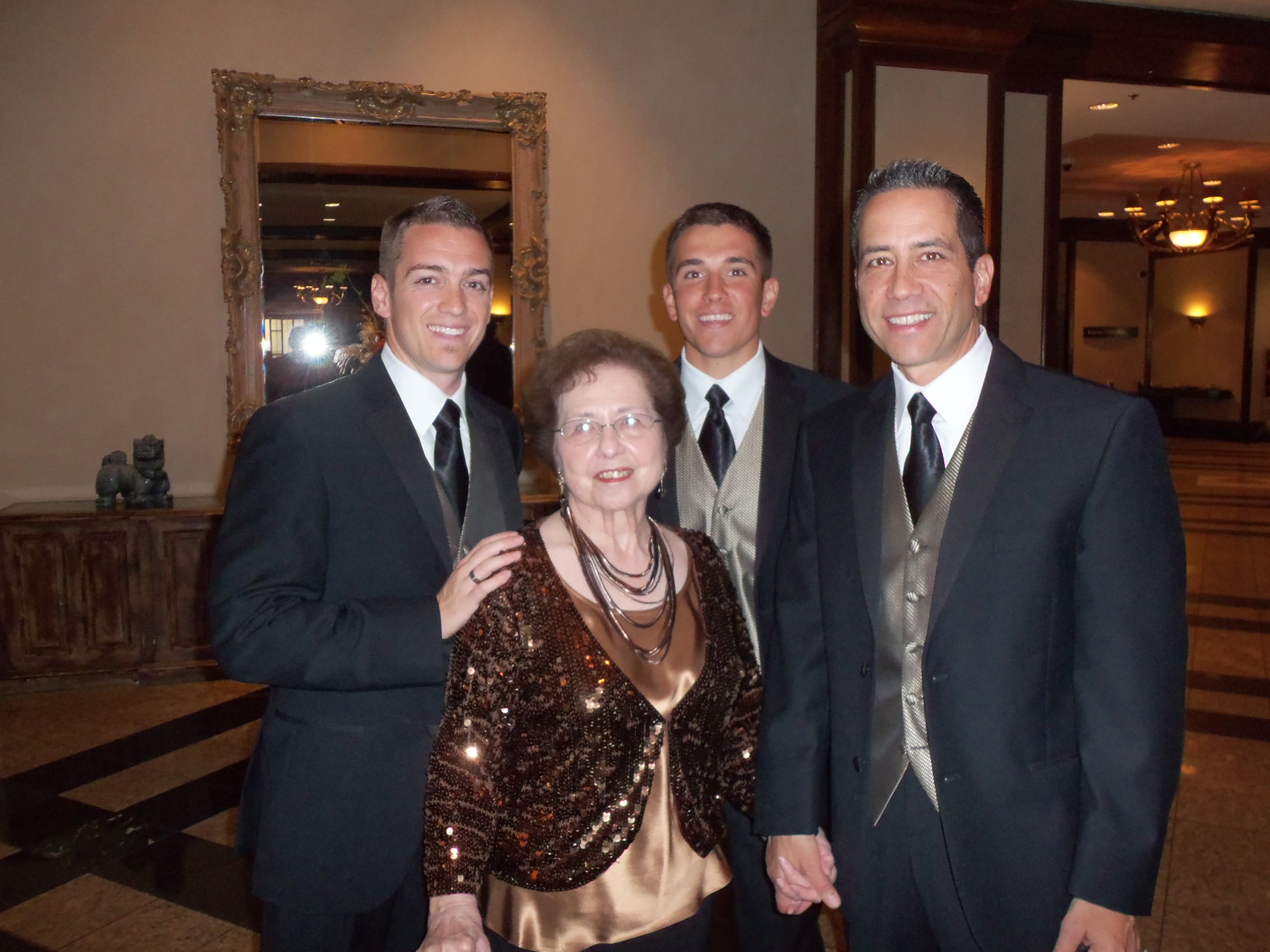
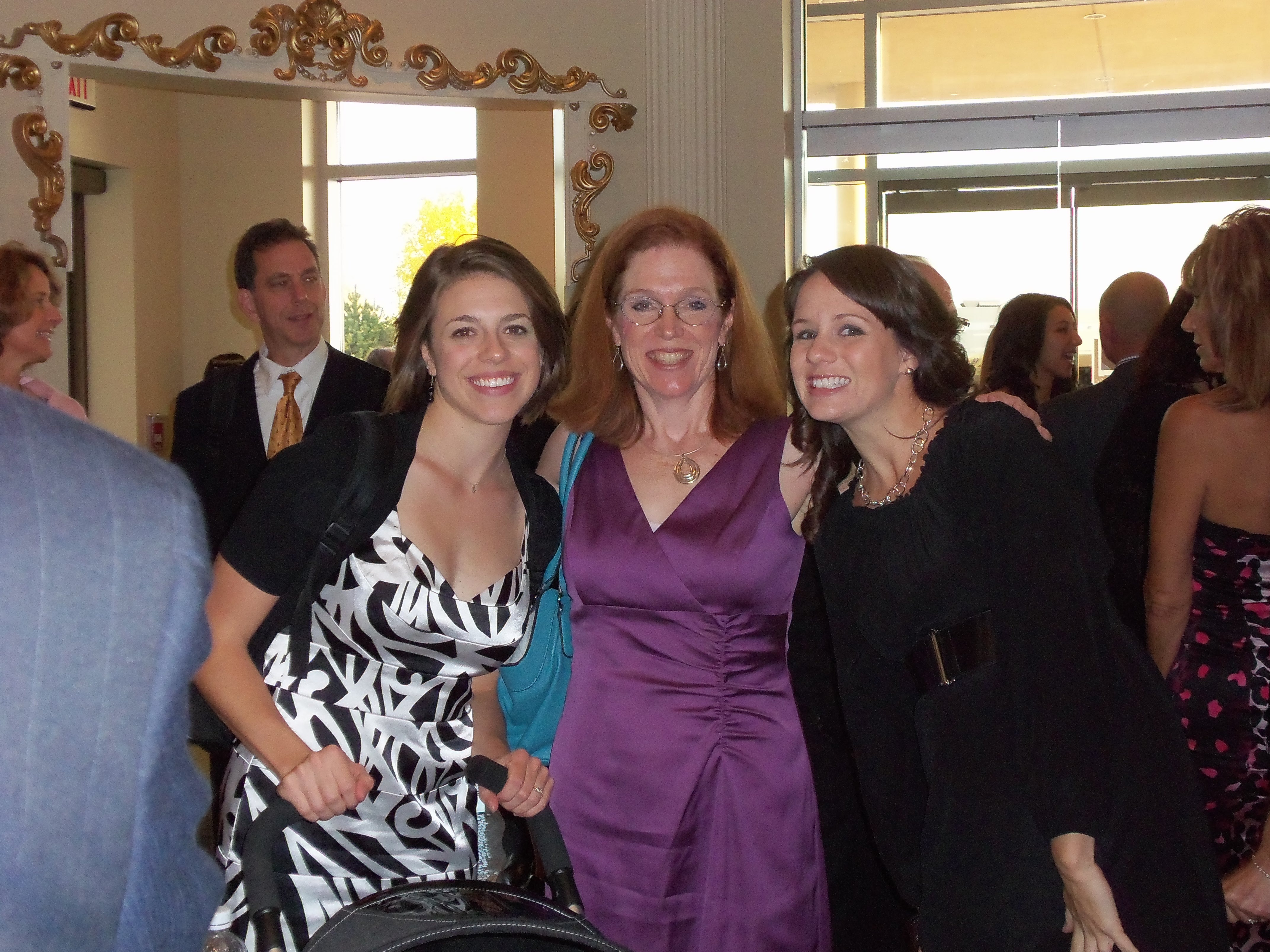
The rest of the weekend was lovely.  The weather cooperated.  The little ones did well despite NO routine and missed naps.  We had time to hang out with family and catch up on lives.  And Eve & Stephen were happily united.  Here are some pictures.

“My God would never….”

1 Comment

Have you ever heard someone exclaim indignantly or self-assuredly, “My God would never send anyone to hell….”?   This person’s god usually is the kind of god that would NOT do whatever he/she finds troubling.

But we are not invited to pick and choose or craft a god that fits our personality or meets our needs or conforms to our worldview.

This tendency is akin to someone saying, “I don’t like triangles that have pointy ends.  From now on I will only accept triangles with soft, rounded ends.”

Well then, Mister, what you have is no longer a triangle.

I know this example is silly, but that is what we do with God when we edit out distasteful aspects like his wrath (how primitive!), or his prohibitions against certain sexual behaviors (how antiquated!), or his command to leave off worrying (how unrealistic!).

If we chop off the unpleasant bits of God, He is no longer God.  For by definition, God is ALL the attributes mentioned in the Bible.  If we remove even one of his attributes, then it is no longer God we have.  Sure we can arbitrarily remove the crust from a pizza and still pretend and call it a pizza.  But it’s not a pizza despite our saying otherwise.  At this point, it’s just a glob of sauce.  You may call it pizza.  But then you are using language in an irrational manner.

So be honest, say that you are having a difficult time reconciling God’s justice with his love, or his promise of real joy with the presence of evil.  But don’t go changing the ontological nature of God.   We are called to love the Biblical God with all our mind, heart and strength.  We don’t get to invent the god of our own choosing.

PS:  just as a prayerful exercise, here is a start to some of the many attributes of God.  This is by no means an exhaustive list, but represents an organized way I employ to praise Him.  I’m sure you can add to each letter.  What you cannot do is take any of these away and still have God.

I praise God that He is:

A -abundantly able   B – before all time  C – caring/ chooses me  D -dependable                           E– eternal  F – faithful  G – giver of all good gifts  H – holy   I – immutable  J – just     K – kind  L – loving and lovely  M – merciful  N – never late  O– omnipotent/omniscient  P – powerful Q-quiets me with His presence R-righteous  S – saves me/ supplies me/ succors me  T-Truth  U – understands me/ is underneath me   V-victorious  W – wise    X – (e)xceedingly glorious  Y– yearns for me  Z – zealous for my love


Decisionmaking and God’s Will

7 Comments

Talks from a conference on knowing God\’s will

You’ve probably heard of or read Kevin de Young’s book, Just Do Something.

You should read it.  It’s short and will change your mind about how to make a ‘godly’ decision.  Before I talk about it, I want to share 3 anecdotes from my own life that are probably fairly typical of how Christians act.

Before Mike and I were Christians, when we were just faithful church-attendees, we would make decisions pretty rapidly………. and then ask God to bless them.  Once we became Christians, we started on that journey of actually growing into those ‘new creations’ by being ‘transformed by the renewing’ of our minds via God’s Word.  But that was a slow process.  The very first Bible Study we ever attended was 23 years ago in Chipping Norton, England.  We had never consistently nor seriously examined God’s word.  At the time, we faced a major decision about Mike’s job and the financial stakes seemed very scary.  We prayed at length for guidance.  We eventually made a decision in the absence of FEELING God’s guiding hand.  I remember how for years after I would boast that though we had repeatedly asked God for a sign, He had never come through.  My boast had the kind of tone of ‘what’s wrong with God that He wouldn’t respond to such a sincere and Godly prayer!!!’

Fast forward to our older son Graham and a life decision he faced the spring of his freshman year.  Should he stay at his college or transfer to a famous music school?  His grandfather would have paid the difference, so money was no object.  It was the first serious decision he made as a new Christian.  I, frankly, was curious how God would answer that. To me it seemed that the stakes were high because Graham’s faith was nascent.  His technique was to try out each scenario in his mind’s eye and see how he felt.  As he flip-flopped his way through the days after receiving his acceptance, he finally got angry with God and gave him an ultimatum.  (I’m not sure WHAT he saidJ )  But the next day, he woke up FEELING Choice A – Stay and just left it alone, with some suspicion.  But the following day, the sense to go with Choice A had grown silently stronger.  So he opted to remain at his current college and turned down the music opportunity.  It was obviously the right choice, because he married his wife Shay, plugged into a church, launched a career and the rest is another story.

My last example had to do with leaving a teaching position.  I truly wanted to wait on the Lord and not do anything ‘out of His will’, so my intentions were A-OK.  And by this time, after 10 years of serious Bible study and growth, I truly had grown into the new creation that I was positionally.  But I did not know how God would let me know ‘His Will For My Life’.

When a senior colleague announced to me that ‘next year I would have to toe the line with her foreign language philosophy of teaching’ I knew instantly that I had received my sign from God, because what she was suggesting was 100 % unacceptable to me.  But when I told my Christian friends, two of them straight away assured me that the way to know if the decision was right was if one had a sense of peace.

Looking back at these three decisions, I realize that many Christians ( I don’t think I’m alone in this) look for

a)   A direct communication or sign from God

b)   And/or a feeling of peace

According to Kevin de Young and Dr. Garry Friesen, those are NOT biblical.  I have read Kevin’s book twice in the past 2 years, but recently I listened to the talks that are hyperlinked at the beginning of this blog post.  What they teach is VERY FREEING!

Their talks revealed to me that when we camp on our need for a sign, it really is a decoy for our lack of trust in God and our FEAR of making wrong decisions.  According to these pastors, decision-making is not rocket science for the Christian.  In summary here are the steps one should take:

a)   We should look at our heart’s desire and our talents & gifts.  What do we WANT to do?   It makes sense to start there.

b)   Make sure that what we propose does not violate the moral will of God (doesn’t go against His commands).  This involves more than just the Ten Commandments.  We have to study and meditate on what God says throughout the entire Bible.  Therefore, it makes sense that Paul counsels us to be transformed by the renewing of our minds.  This is NOT a quick step, but a life process.

c)    Where God does NOT prohibit, then we should enjoy the liberty He gives us and act responsibly.

d)   Make sure that the proposal is WISE and PRUDENT.  It is scriptural to pray and ask God for wisdom.  We should read the ‘wisdom’ books of the Bible.  We should ask godly mature Christians who know us for their advice.  What do they see in us?  Do they think what we are proposing is a good fit with our talents?

e)    We should pray, NOT for guidance, but to be godly and wise, courageous and honest when we take the next step TOWARD a decision.

f)     If we have a choice between two equally good courses of action, we need to ask ourselves this question:  Which one will make us love God and love others more?

g)    Finally, once we move out and make a decision, we are to continue to trust God that He will work all things together for our good (that is: our sanctification).  The grace will be sufficient for each future day.  Anxiety is living out the future before it gets here.

I was comforted to hear that problems and obstacles and lack of peace are NOT signs that we made the wrong decision.  That is part of life.  Dr. Friesen talked about expecting to make at least FIVE mistakes a day.  Whew!  What a freeing idea.  I realize that I expect perfect, problem-free days.  Talk about unrealistic pressure!

You’ll enjoy listening to the talks.  I downloaded them to my iPod, but you can listen on line just as well.

May God give you godly courage and a willingness to make some mistakes while you risk big, adventuresome and fun things for the glory of God!

And they named him Noah. Lessons about our ancestor.

2 Comments

Now he (Noah’s dad Lamech) called his name Noah, saying, “This one will give us rest from our work and from the toil of our hands arising from the ground which the LORD has cursed.”  Gen 5:29

Our grandson Noah is due in a few weeks.  Providentially my daily bible reading has brought me back to the beginning, so that I am in Genesis these days.  It goes without saying: I have been keenly interested in the account of Noah.

We are introduced to him in the preparations Dad Lamech makes for his birth. The prophetic words recorded in verse 29 above are so full of hope.  We hear joy over the impending birth of this son.   There is no fear that he will turn out ‘wrong’.  There is a confidence that can come only from a father who knows God.  Lamech the Godly as I will call him (the other, Lamech the Vain and Violent, described in Chapter 4 is a descendant of Cain) knows his family origins.  He understands his original grandparents’ sin.  He acknowledges their punishment that has been passed down to all generations of mankind.  He does not sulk or complain or criticize God.  He realistically acknowledges how difficult working the land has become.  And he dreams of better days brought on by this son of his.

The power of a godly father is unparalleled.  A few verses later, in Chapter 6, we learn how wicked men and women have become.  But Noah, son of a father who has taught him properly to fear the Lord, finds favor in God’s sight.  In fact ONLY Noah is considered righteous enough to be saved as a blood line.  His brothers and sisters, nieces and nephews will perish in the flood.

What makes Noah a standout?  He obeys God’s commands when given, he uses common sense when appropriate and he waits for further instruction when the situation is beyond him.

In Genesis 6:14, God starts to give specific guidance about what to do.  Noah does not question God, but sets to carrying out the construction of the ark.  And he completes the task. In Genesis 6:22, we read, Thus Noah did; according to all that God had commanded him, so he did.

I put myself in Mrs. Noah’s shoes.  My questions would have been the following:

  • How will we get the animals to come on board?
  • What about all the bodily wastes (ours and the animals)?  Do we have to haul them up to our floor and get rid of them out the window?
  • How will we feed the animals?
  • If there is only one window, we’re going to want it for our family.  And if there are 3 stories, then that means the animals will be in the dark.  Will they panic and fight each other?  Will they hibernate?   Will the ark be big enough if they start multiplying?
  • How long will we have to be in the ark?
  • What clothes, tools and supplies should we bring?
  • What about my prized heirlooms from Great-Grandma Eve?
  • Where will we land?
  • What are we going to do all day long and all night?
  • What will happen to us afterwards?

I can imagine Noah saying to his wife, sons and daughters-in-law, “Don’t worry, the Lord will guide us in all these areas.  Hasn’t he instructed us up until now? ”

When the rains do stop, we read how Noah’s common sense kicks in.  He thinks to send out first a raven and then a dove.  But he doesn’t open the door until God tells him.  Noah seems to exercise that perfect balance of waiting, acting, obeying.

The ‘take-aways’ for me in this chronicle of our ancestor Noah are in the area of decision making and parenting. God obviously trusts us to learn how to rely on him for what is beyond us and to do for ourselves what is within reach.  This lesson is important to me, for I know that I tend to fret over / angst about/ project scenarios that never come about.  I have to continuously remind myself that God is creative and capable.  After all, he did create the whole universe.  I can trust Him to provide.  I’m sure that most of what Mrs. Noah worried about never happened.

Finally, parenting has eternal consequences.  The power of godly parents can change the course of history.  Lamech and his wife taught Noah well.  Yet, I have to assume, if they taught Noah, they also taught all their children.  However, only oldest child Noah survived the deluge.  We parents are limited.  Children are accountable to God themselves and do make wrong choices for which they suffer consequences.  We do the best we can, guided and empowered by the Holy Spirit.  The final outcome is in God’s hands.

Noah will soon join his cousin Chloe, God willing.  I pray every day for these two children that God will, “Satisfy (them) in the morning with (his) unfailing love, that (they) may sing for joy and be glad all their days.” Psalm 90:14.   I want them to thirst and hunger for God early on to such a degree, that only God satisfies.  Furthermore, I pray that their being filled up with the joy of the Lord will spill over onto all whom they meet.

My Four Favorite Hebrew Words

2 Comments

The best Bible I bought was an NASB translation that has both the Hebrew and the Greek words at the back.  So select words are bolded and then the Strong’s index number is listed as a side script and one can flip to the back and see the meaning in multiple nuances.  It’s VERY cool.  My study is exponentially enriched because I can glean extra pickings and plumb the very context and significance of a term.  I knew I wanted this kind of reference tool as soon as I learned that the Holy Spirit was given to us as a deposit or pledge, as an ‘arrebon’ (Strongs-328).  The reference describing this ‘arrebon’ mentioned that that word is used today in Modern Greek to mean ‘engagement rin’.  That just made me love God all the more!  What a great image of God’s commitment to us!

Today I want to tell you about my four favorite Hebrew words and how they have become friends:  The first one is: # 6960- qavah.  It means to wait patiently.  Psalm 40 commences, “I waited patiently for the Lord; He turned to me and heard my cry.  He lifted me out of slimy pit, out of the mud and mire.”  Qavah has the sense of binding cords or strands.  I picture David in a pit, confidently waiting on God because he is praying continually.  But all the while he is praying, he is preparing for his assured rescue by weaving a rope from materials found in the pit.  Qavah is assuredly NOT passive.  We pray, thus casting  all our cares on Him.  We know He is going to help and rescue when the time is right.  So we start our preparations as best we can from our end.  We don’t wring our hands and worry.  Qavah appears 53 times in the OT.

Related to waiting patiently is the Hebrew word for trust – # 982 – Batach. Earthy me thinks ‘buttocks’ – hay, I need a mnemonic device!   The meaning of trust is expansive enough to include a good sense of being ‘care-less’, made secure, emboldened, made confident, an utter reliance on something.  It occurs 129 times in the OT.  Psalm 37:3 is a favorite of mine– Trust in the Lord and (you will) do good.  And then again from Psalm 40:4, Blessed is the man who makes the Lord his trust. This word trust is a version of Batach – it is mitbach  – # 4009.

The next two Hebrew words are often paired together.  They are loving-kindness and truth/faithfulness.  Khesed, # 698 is the Hebrew word for loving-kindness.  I don’t understand how some people blithely dismiss ‘the God of the Old Testament’ as being different from the Jesus of the NT.  God the Father and Jesus are one.  Both are Loving-Kindness in person.  Not fewer than 253 times does this attribute of God appear in the NT.  David relies on God’s ‘khesed’ to protect him.  Numbers 14:18The LORD is slow to anger, abounding in  ‘khesed’ and forgiving sin and rebellion.  Hosea 6:6 For I desire ‘khesed’, not sacrifice, and acknowledgment of God rather than burnt offerings.

As a twin to ‘Khesed’ is the Hebrew word ‘Emeth’.  It means both truth and faithfulness.  It is used 128 times in the OT.  Because God is a God of truth, He is faithful to His word, to His character.  What He says is true.  What He says will come to pass.  I can depend on Him to tell it like it is and not change His mind.  Psalm 19:9 says that the law or ordinances or the Word of God is ‘emeth’, meaning that it is sure.  In Psalm 31:15, He is called the God of Truth.  The psalmist, so in love with ‘God’s truth’ swears in Psalm 40 that he does not withhold God’s ‘emeth’ from other believers.  What could be more beautiful than Psalm 85:10, “Khesed and emeth meet together” – ‘Loving-kindness’ and ‘faithfulness/truth’ come together in God.

These Hebrew words are becoming familiar friends that comfort me.  As I read my Bible each day, I am excited to spot them, these signposts of God’s character, and indicators of God’s promises.  I praise God for our love of His Word…..which means our love for Him, the Logos.  And don’t forget that the concept ‘logic’ is tied to the Greek word Logos.   But delving into those riches will have to wait –  for another post,  about my favorite Greek words.

I just want you to realize that since you & I are made in God’s image, equipped to use and savor and understand words, that there is a treasure trove in the Hebrew and Greek languages.  Since God’s communication to us is written in those languages, treasures lie just below the surface, waiting to be retrieved.  Happy digging!

This bears repeating-or how to remember what is important.

Leave a comment

It all started with a dream last weekend about my grandmother, Mimi.  Mimi lived with me my whole life until I went away to college.  Yet I cannot remember a single thing she said, except for an embarrassing pet name she bestowed on me, “Maria Baby Ball”.  Ball was a family name 3 generations removed and also my middle name.

When I awoke from my dream I stayed disturbed for almost a week. First I asked my husband what he made of my foggy remembrances.  In the process of sharing my angst, my husband and I started talking about school teachers and those we recalled.  As our memories were stirred, we could only access feelings, no words.  For Mike, the teachers he could name were all ones who had liked him.

When I met for coffee with Kris, my dear friend, she shared about how significant a role her grandmother had played in her childhood and spiritual formation.  She has vivid memories of her grandmother reading her Bible and sharing Jesus with her. Kris’ opposite experience with a live-in grandmother strengthened the remoteness I felt when thinking of my grandmother. The more I sifted through my childhood years, the more I realized that my grandmother was just background.  I next phoned my cousin Darby who is a few years older, to see if she could fill in some color to my two-dimensional recollections.  Our conversation was animated, but produced minimal fruit for either of us.

Remembering is an important theme in the Bible.  Hebrew history is littered with sad tales of generations who failed to remember and subsequently suffered serious trouble.  Many were the warnings, so calamity should have come as no surprise.  But human nature being what it is, we, too are startled when we forget significant past events of God’s lessons.  Being more modern and civilized has not helped us.  (Who seriously believes men are evolving into less evil beings?)

So what are we to do?  What should Mimi have done if she had wanted to bless me with any profound lessons or insights gained from her 95 years?   Verbal repetition is the key.  Repetition sears content into our brains.  I know this from negative experiences.  When I rehearse the hurts done to me by two or three people in my past at various times, I speak the details out loud to a friend or to my husband.  I formulate the thoughts, I say the words, I feel the pain, I hear the words and the intensity of my voice and that memory groove is deepened.

God knows us. (After all he made us).  He knows how our brains work, how we flit to the next event in our lives.  He repeatedly commands us to work at remembering. His word is filled with exhortations to remember and not forget:

Ps 106:13- But they soon forgot what he had done and did not wait for his plan to unfold.

Ps 78:42 – They did not remember his power- the day he redeemed them from the oppressor.

Deut 4:23a – Be careful not to forget the covenant of the LORD your God that he made with you.

Josh 1:8- Keep this Book of the Law always on your lips; meditate on it day and night, so that you may be careful to do everything written in it. Then you will be prosperous and successful.

And a more positive resolution –

Ps 119:16 -I delight in your decrees; I will not neglect your word.

Ps 119:93 – I will never forget your precepts, for by them you have preserved my life.

So why does this matter?  Well, for one thing.  I, too am Mimi – to little Chloe Isla Cochrane, aged 19 months.  And there is another Cochrane grandson on the way.  My friend Kris is a grandma to 3 grandchildren.  My cousin Darby is Mimi to 5 grandchildren.  A lot is at stake.  What and why do you need to remember?  What are you going to do about it?

About God’s glory – what I learned on my school’s retreat

Leave a comment

Psalm 19:1-2

1 The heavens declare the glory of God; the skies proclaim the work of his hands.

2 Day after day they pour forth speech; night after night they display knowledge

So whose glory are you intent on displaying?  Whose knowledge?  If nature purposefully magnifies God, why don’t we?

These are questions I ask myself daily.  For over a year, I have been painfully aware that I am more interested in communicating my talents and my uniqueness, hence ‘my glory’ than I am about making God look good.  Yet my daily prayer is, “Give me this day Lord, an opening to say something that makes much of you”.  Rarely, do I achieve that.  Now, to be truthful, I pray in the morning and then the rest of the day I fall back into my natural thought patterns of wanting someone to find me fascinating and ask me about my life.  Yes, I am well aware that this is pretty pathetic and also sinful.  I am stealing God’s glory.  After all, the reason you & I are alive is to glorify God.  So daily, I am NOT fulfilling my God-given purpose.

Last week our school, Summit Christian Academy, dedicated 3 days to an off-campus retreat.  The schedule for teachers and 7th-12th graders included community service, outdoor activities, free time, a talent show, games, small group time and a speaker.

The pastor’s theme was something to do about living a radically different life.  But God’s theme for me was, “How NOT to Rob God of His Glory”.  I was primed.  The young man from Lynchburg spoke for 3 one-hour sessions and it was in the last 10 minutes of Session 3, that God gave me specific insight on how to accomplish my heart-felt prayer.

The text was Acts 19: 13-16.  There were seven sons of a Jewish priest named Sceva.  These sons were exorcists who had observed Paul invoking Jesus’ name and driving out evil spirits.  They tried to copy Paul, although they were not believers.  At one point during an exorcism, a demon spoke out, frightening the seven fakers.  He said, “Jesus I know, and I know about Paul, but who are you?” And of course, these startled and petrified men fled, leaving their very clothes behind them.

The pastor’s point (that God tailored to me) was that as long as we have our own agenda and are living for ourselves, we are NO threat to the spirit world, the world of demons. In fact, we are like the seven sons of Sceva, totally unknown to Satan’s minions.  Self-absorption, therefore, is a guarantee of totally ineffectiveness on behalf of the Kingdom of God.  I will add the other SELF-sins:  SELF-RIGHTEOUSNESS, COMPLAINING, WORRY, SELF-PITY, DEFENSIVENESS.  You get the picture.  As long as we are just about ourselves, we are certainly not glorifying Jesus.

But, if we realize that by our living for God’s glory, we can ‘stick it to the spirit world’ as the pastor put it, we are fulfilling our purpose.  When we don’t complain amidst difficult circumstances, we are a threat to the dark side.  When we are praising God for who He is, when we are praying, when we are patiently waiting year after year – in faith for God to work in someone’s life, we are taking a stand for the worth of God’s glory.   In short, when our thought life is so immersed in God instead of in us, we are confounding ‘the spiritual forces of wickedness’.

Paul is explicit in his letter to the Ephesians when he says that our fight is not against flesh and blood, but…..

We are ….contending against the despotisms, against the powers, against [the master spirits who are] the world rulers of this present darkness, against the spirit forces of wickedness in the heavenly (supernatural) sphere.

As you can see, this pastor’s words during our retreat were the practical ‘how-to’ I needed to actively glorify God instead of Maria.  What is SO encouraging to me is that in light of what my purpose is and equipped with these concrete steps, I can now see how every day matters.  There doesn’t have to be any such thing as a wasted day, no matter how my personal ‘stuff’ goes.  Problems, setbacks, failures as well as successes are ALL occasions to wait, thank God, trust Him and pray.   I can also encourage someone who is flat on her back in the hospital or constrained in a nursing home that her life also matters, no matter her physical limitations.  One’s good attitude matters, one’s prayers for others matter, one’s good cheer matters, and how one spends her waking hours DOES make a difference in God’s kingdom.

So thank you Pastor Matt.  I, too, will enjoy opening my eyes each morning and imagining the spiritual forces of darkness grumbling, “Oh no, she’s awake!”


Older Entries Newer Entries